


Biophilie 2.0 : la science de l’utilisation du bois pour créer un sanctuaire sans stress
The article explains biophilic design principles for 2026, including research suggesting that around 45% natural wood surface coverage keeps stress lowest, the calming effect of touching oil-finished wood, and the appeal of fractal grain patterns and soft geometry. It shows how wooden floating shelves, hexagon shelves with trailing plants, sofa arm trays, and mirror wall art can bring these nature-based ideas into a home.
En 2026, le monde du design d’intérieur a dépassé le « minimalisme stérile » pour entrer dans une ère plus centrée sur l’humain. Nous passons plus de temps à l’intérieur que jamais auparavant, et en conséquence, un concept autrefois réservé aux architectes est devenu courant : Design biophilique.
Mais la biophilie ne se limite pas à placer une plante dans un coin. Il s’agit d’un cadre scientifique basé sur la « hypothèse de la biophilie », qui suggère que les êtres humains ont un besoin biologique inné de se connecter à la nature. Lorsque nous sommes privés de cette connexion — entourés de plastique, de métal et de cloisons blanches — notre taux de cortisol augmente et notre créativité diminue.
Chez Ewart Woods, notre mission est de combler ce fossé. En utilisant du bois de haute qualité provenant de sources durables, nous vous aidons à faire entrer le pouvoir apaisant de la forêt dans votre maison. Voici un guide détaillé pour maîtriser la tendance biophilique.
1. La règle des 45 % : trouver votre équilibre visuel
Des études récentes en psychologie environnementale ont identifié un « point d’équilibre » pour le bois dans la maison. Les recherches indiquent que lorsque environ 45 % des surfaces d’une pièce sont composées de bois naturel, le niveau de stress humain est au plus bas.
Si une pièce contient trop peu de bois, elle paraît froide et clinique. Si elle en contient trop (comme un chalet en rondins), elle peut devenir écrasante. L’objectif est d’introduire le bois de manière stratégique afin d’atteindre ce seuil de 45 %.
Comment l’appliquer : Si vous avez des murs blancs et un sol moderne, vous avez besoin d’éléments en bois à fort impact.
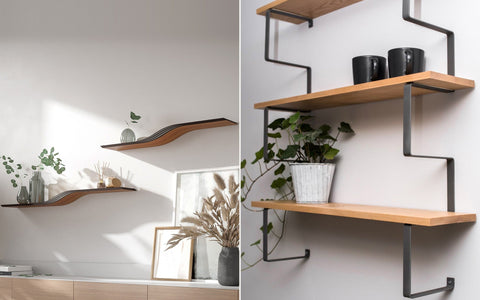
La stratégie Ewart Woods : Utilisez des organisateurs muraux et des étagères murales flottantes pour rompre la « monotonie » d’un mur plat. Les motifs complexes et fractals présents dans nos finitions chêne et noyer offrent un « repos visuel », permettant à votre cerveau de récupérer après l’exposition aux écrans numériques.

2. Réduire le cortisol grâce à « l’honnêteté tactile »
La biophilie ne concerne pas seulement ce que vous voyez ; elle concerne aussi ce que vous touchez. En 2026, on parle d’honnêteté tactile — l’idée que les matériaux que nous manipulons doivent offrir une sensation proche de celle de la nature.
Des études ont montré que toucher du bois véritable (surtout lorsqu’il est fini avec des huiles naturelles) peut réellement réduire le rythme cardiaque et la pression artérielle. À l’inverse, les matériaux synthétiques imitant le bois ne déclenchent pas la même réponse biologique apaisante.
L’astuce biophilique : privilégiez le bois pour les objets que vous utilisez le plus souvent.
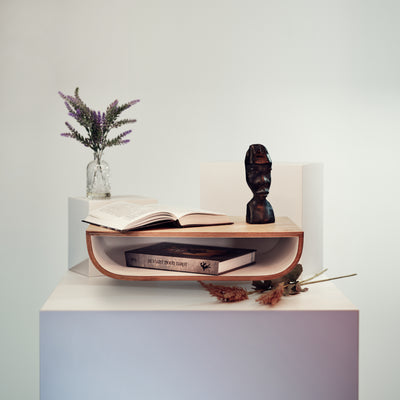
Mise en avant produit : Nos plateaux d’accoudoir en bois et porte-clés muraux magnétiques. Chaque fois que vous posez une tasse ou prenez vos clés, vous interagissez avec un matériau naturel qui apaise votre système nerveux. Choisir notre finition à l’huile permet de conserver les « pores » du bois ouverts, offrant cette sensation chaleureuse et organique.

3. Adopter la « géométrie douce » et les motifs fractals
La nature fonctionne rarement avec des angles parfaits à 90 degrés. Pour adopter pleinement le design biophilique, il faut s’éloigner des meubles trop « carrés » et se tourner vers la géométrie douce — des formes qui imitent les courbes d’une rivière ou la silhouette d’un arbre.
La science : notre cerveau est programmé pour traiter les « fractales » — des motifs qui se répètent à différentes échelles. Le veinage du bois en est un exemple naturel.
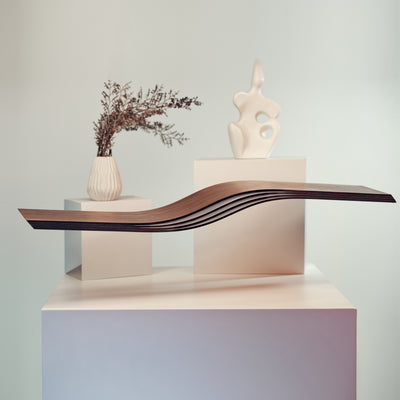
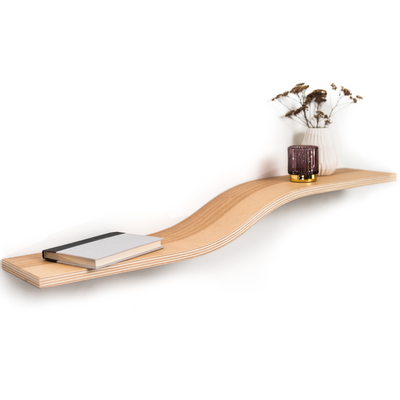
La stratégie Ewart Woods : Nos étagères murales flottantes courbées « Wave » sont conçues pour casser les lignes rigides d’une pièce standard. Leur forme fluide imite le mouvement organique et donne à l’espace une sensation de respiration plutôt que de rigidité.

4. Le concept de « mur vivant » avec des hexagones
L’une des tendances les plus populaires en 2026 est le jardin vertical. Cependant, entretenir un mur végétal complet peut être difficile. Une approche plus durable consiste à utiliser des structures modulaires en bois.
Comment l’appliquer : regroupez des formes géométriques pour créer un point focal rythmé et inspiré de la nature.
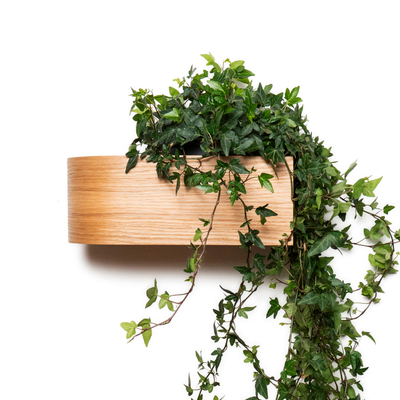
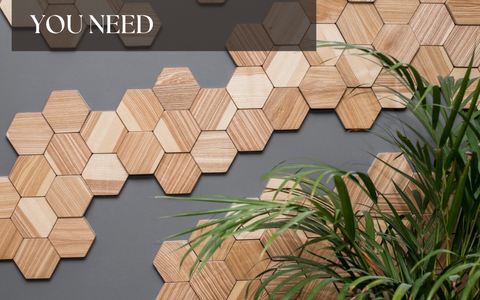
La stratégie Ewart Woods : Nos étagères hexagonales en nid d’abeille sont un outil biophilique idéal. En les regroupant sur un mur, vous recréez l’architecture d’une ruche. Utilisez-les pour accueillir des plantes retombantes comme Pothos ou plantes serpent. L’association du bois et des plantes crée un « micro-écosystème » qui améliore l’air et le bien-être.

5. Rythmes réfléchissants : utiliser les hexagones miroir pour amplifier la nature
Dans le design biophilique, la lumière est aussi importante que les matériaux. Pourtant, de nombreux intérieurs possèdent des zones sombres où les plantes poussent difficilement et où l’ambiance « bien-être » disparaît.
La solution Biophilia 2.0 ne consiste pas à installer un grand miroir, mais à créer un rythme réfléchissant. En utilisant de petites surfaces géométriques, vous imitez la manière dont la lumière se reflète sur l’eau ou la rosée.
L’astuce biophilique : créez une composition murale mêlant bois et miroirs pour diffuser la lumière naturelle dans la pièce.
La stratégie Ewart Woods : Combinez nos décor mural hexagonal miroir avec nos hexagones en bois. En alternant les miroirs et le bois, vous créez un mur vivant qui reflète les plantes et diffuse une lumière naturelle harmonieuse, tout en conservant une ambiance chaleureuse.

Réflexion finale : une maison qui apaise
Le design biophilique est plus qu’une tendance : c’est un retour à nos racines. En choisissant une pièce de Ewart Woods, vous ne faites pas qu’acheter un meuble — vous faites entrer un fragment de la forêt lettone dans votre intérieur.
Que vous recherchiez le confort ergonomique d’un support d’écran en bois pour votre bureau ou la beauté géométrique de nos étagères Pie pour votre salon, souvenez-vous : votre maison doit être un lieu où vous ne faites pas que vivre, mais où vous vous épanouissez.
Products related to this article
Frequently asked questions
What is biophilic design?
Biophilic design is a framework based on the Biophilia Hypothesis, which suggests humans have an innate need to connect with nature. It goes beyond adding a plant in the corner, using natural materials, organic shapes, and light to create calmer, healthier interiors.
How much wood should a room have to feel calming?
Environmental psychology research cited in the article points to a sweet spot of roughly 45% of a room's surfaces in natural wood grain. Too little feels clinical, while too much can feel overwhelming, so wood accents like shelves and organizers help hit the balance.
Does touching real wood actually reduce stress?
Studies have shown that touching real wood, especially wood finished with natural oils, can lower heart rate and blood pressure. Synthetic wood-look laminates do not trigger the same relaxation response.
What are fractal patterns in interior design?
Fractals are patterns that repeat at different scales, and wood grain is a natural fractal. Our brains are hardwired to process them, so visible grain provides visual rest and helps the eyes recover from screen time.
How can I create a living wall without a moss wall?
Cluster modular hexagon wall shelves to mimic honeycomb architecture and fill them with trailing plants. The combination of wooden frames and green leaves creates a rhythmic, nature-inspired focal point that is much easier to maintain than a full vertical garden.
What plants work best on wall shelves?
Trailing, low-maintenance plants like Pothos and Snake Plants work well on hexagon and floating shelves, softening the geometry while staying easy to care for.
How do mirrors fit into biophilic design?
Instead of one large flat mirror, scatter small geometric mirror pieces among wooden wall elements. This reflective rhythm mimics sunlight glinting off water, spreads natural light into dark corners, and expands the space while keeping an earthy feel.
Why choose oil-finished wooden furniture?
An oil finish keeps the pores of the wood open, preserving the warm, organic feel that supports the biological relaxation response. EWART WOODS pieces are handmade in Europe from sustainably sourced timber, bringing a piece of the Latvian forest into the home.



Dejar un comentario